When Cosy Becomes a Cage: The Dark Side of Hygge Nobody Talks About

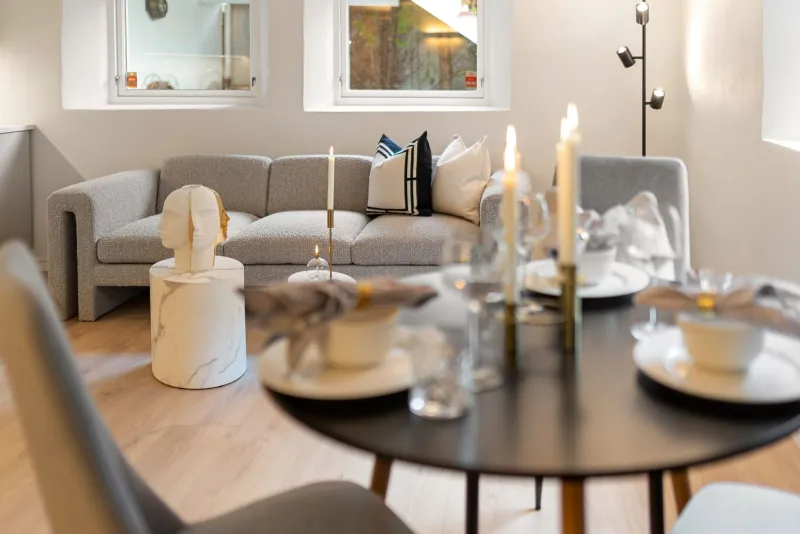
There's a particular kind of traveller you'll spot in any long-stay Airbnb or co-living space from Lisbon to Chiang Mai. They've arranged a small collection of meaningful objects on the windowsill. There's a scented candle — probably from a Scandinavian brand. A knitted throw has appeared from somewhere. The fairy lights went up on day two. Everything is, in a word, hygge.
And they haven't left the flat in three days.
This is the hygge trap. And if you've ever found yourself refreshing a property listing for a place with a 'cosy reading nook' instead of booking that bus ticket to the next town, you've already stepped into it.
What Hygge Actually Means — And What It Doesn't
The British love affair with hygge is well documented. Since Meik Wiking's The Little Book of Hygge landed on coffee tables across the UK back in 2016, the concept has been enthusiastically adopted, repackaged, and — let's be honest — somewhat misunderstood. In the UK, hygge has largely become shorthand for interior aesthetics: warm lighting, chunky knitwear, a good biscuit situation.
But ask a Dane what hygge actually means, and you'll get a more nuanced answer. It's less about objects and more about a quality of presence. It's the atmosphere that arises when people feel genuinely at ease — with themselves, with others, with the moment. Crucially, hygge is not something you manufacture through soft furnishings. It's something you stumble into.
The nomadic Danish perspective on this is revealing. Hygge, in its truest form, doesn't require a permanent address. Some of the most hyggeligt moments happen around a campfire with strangers, in a draughty mountain hut, or squeezed into a local café with rain hammering the windows outside. The discomfort is often part of it.
The Nesting Instinct and Why It Intensifies on the Road
Here's where the psychology gets interesting. The more unsettled your external life, the stronger the urge to control your immediate environment. This is why so many location-independent workers — particularly those new to the nomadic lifestyle — go overboard trying to recreate a sense of home wherever they land.
It's not irrational. Cognitive load is genuinely higher when everything around you is unfamiliar. Your brain is processing new sounds, new social cues, a new language on the street signs. Creating a predictable, aesthetically pleasing micro-environment reduces that load. Psychologists call this compensatory control — when the big picture feels chaotic, we obsess over the small details we can manage.
The problem is when compensatory control starts eating into the actual point of being somewhere new. When you're spending your Tuesday sourcing the right throw pillow rather than wandering the neighbourhood that exists just outside your door. When 'getting settled' stretches from a day into a week, and the city you've travelled thousands of miles to explore remains largely theoretical.
The Comfort Gradient: How Hygge Hunts for Higher Ground
There's another, subtler mechanism at work. Once you've successfully hygge-fied one space, the bar rises. The next place needs to be at least as good, ideally better. You start filtering accommodation not by location, proximity to interesting neighbourhoods, or price, but by whether the photos suggest sufficient cosiness potential.
This is what Danish nomads sometimes call the comfort gradient — the slow, almost imperceptible drift towards prioritising ease over experience. It's seductive because it feels like self-care. You're not being lazy, you're being intentional about your environment. You're not avoiding the world, you're curating it.
But there's a meaningful difference between genuine rest and avoidance dressed up in Scandi aesthetics.
Some of the most formative travel experiences are uncomfortable in exactly the ways that hygge is designed to eliminate: the slight awkwardness of eating alone at a restaurant where you don't speak the language, the disorientation of a neighbourhood that doesn't make immediate sense, the vulnerability of arriving somewhere without a plan. These moments are where growth actually happens. And a perfectly curated nest is extraordinarily effective at keeping you away from all of them.
What Real Danish Nomadism Looks Like
The Danes who travel most fluidly — the ones who've been doing this for years rather than months — tend to carry remarkably little in the way of comfort infrastructure. Not because they're stoic minimalists performing hardship, but because they've learned to find hygge in the world rather than importing it with them.
This is a genuinely different orientation. Instead of asking 'how do I make this space feel like home?', the question becomes 'what's already here that I can lean into?' It might be a local bakery that becomes a morning ritual. A park bench that catches the afternoon light. A corner of a shared kitchen where conversations happen naturally.
These aren't designed experiences. They're discovered ones. And they require you to be out in the world, a little exposed, a little uncertain — which is precisely the state that heavy nesting is designed to prevent.
Knowing When to Resist the Urge
None of this is an argument against comfort. Rest is real. Decompression is necessary. There are absolutely times — after a brutal travel day, during a bout of illness, when you're genuinely overwhelmed — when building a temporary cocoon is exactly the right call.
The skill is in recognising when comfort has shifted from recovery into avoidance. A few questions worth asking yourself honestly:
Are you nesting because you need to rest, or because going out feels slightly daunting? There's a difference, and you probably know which one it is.
How long have you been 'settling in'? One day is sensible. Four days in a new city and you haven't left the flat for more than groceries is a pattern worth examining.
Is your accommodation search driven by curiosity or by a checklist of cosy features? The best travel experiences often happen in imperfect, slightly chaotic spaces. The characterful guesthouse with the slightly saggy mattress. The hostel common room that's too loud and too bright. Some of the most hyggeligt moments of your nomadic life will happen in places you'd never have chosen if you were optimising for comfort.
Embrace the Draughty Bits
There's a Danish phrase — det er hyggeligt at fryse lidt — which roughly translates as 'it's cosy to be a little cold'. It captures something important: that contrast, mild discomfort, and the presence of the outside world are actually ingredients in genuine cosiness, not threats to it.
The version of hygge that British culture has largely inherited is a defanged one — all warmth and no weather, all softness and no edge. Real hygge has always included the storm outside the window. The point was never to eliminate discomfort entirely, but to find warmth and connection in spite of it.
For nomads, that reframe changes everything. The unfamiliar city, the awkward language barrier, the accommodation that doesn't quite match the photos — these aren't obstacles to hygge. They're the conditions under which something genuinely meaningful might happen, if you're willing to leave the fairy lights unpacked and step outside.
Wander light. That's always been the point.