Candles, Cushions, and Carry-Ons: How Danish Design Wisdom Is Changing the Way Brits Nest on the Road
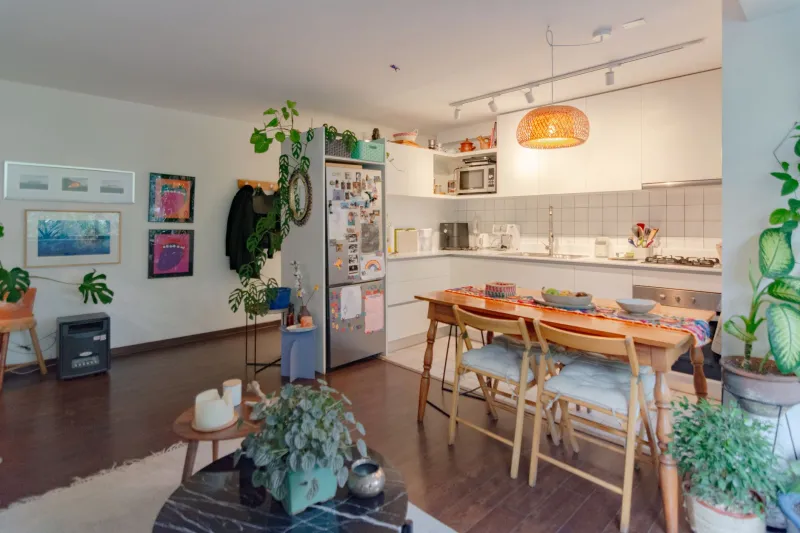
There's a particular kind of despair that hits when you first walk into a furnished rental abroad. You know the one. Bare bulb overhead. Scratchy synthetic duvet. A sofa in a shade of beige that suggests nobody has ever made a deliberate choice in this room. You've just lugged your carry-on up four flights of stairs, your laptop battery is at eleven percent, and the place you're going to call home for the next two months looks like a waiting room at a budget dental clinic.
British travellers are increasingly refusing to accept this as the default. And a growing number of them are turning to Danish design philosophy — specifically the concept of hygge — to fix it.
So What Actually Is Hygge (And Why Should You Care)?
Hygge (pronounced roughly like "hoo-gah", for the record) is a Danish and Norwegian concept that resists a clean English translation, which is probably why it's spent the last decade being simultaneously over-explained and misunderstood. At its core, it's about cultivating a feeling — warmth, ease, togetherness, the particular contentment of being somewhere that feels genuinely sheltering.
What makes it relevant to nomadic life isn't the scented candle industry's version of hygge. It's the underlying design logic: that a space doesn't need to be large, expensive, or permanent to feel deeply liveable. Danes have been applying this thinking to small urban flats, dark winters, and shared living situations for generations. Sound familiar?
For British expats and remote workers navigating a revolving door of short-term rentals, serviced apartments, and co-living spaces, that logic translates almost perfectly.
The Lighting Problem Nobody Talks About Enough
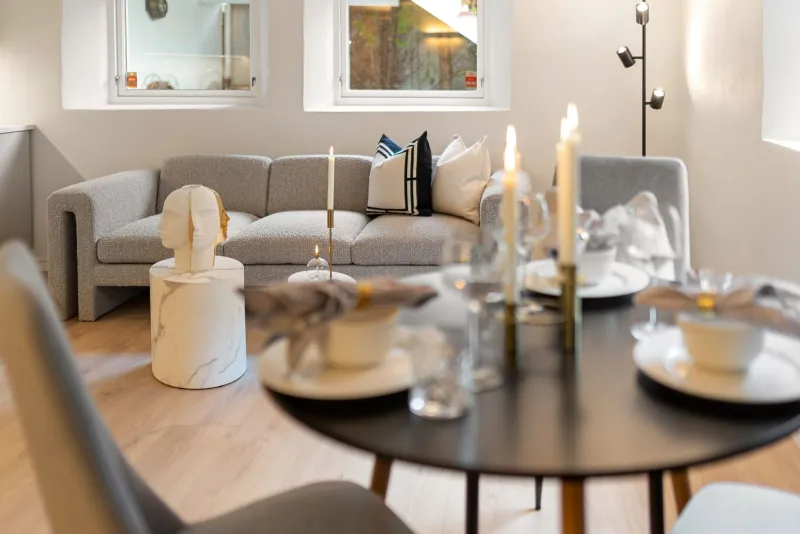
If there's one thing Danish interior philosophy gets right that most furnished rentals get catastrophically wrong, it's lighting. Overhead lighting — that single, glaring ceiling fixture — is essentially the enemy of atmosphere. In Denmark, it's common to arrive at someone's home and find the main light switched off entirely, replaced by a constellation of smaller, warmer light sources at eye level and below.
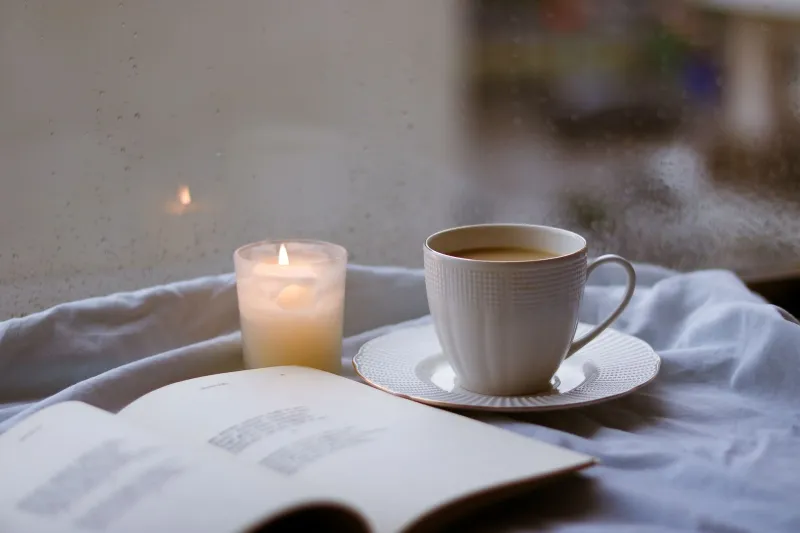
This is genuinely one of the easiest and cheapest interventions a nomad can make. A small LED lamp with a warm bulb (look for anything under 3000K on the colour temperature scale) costs next to nothing and takes up almost no space in a bag. Plug-in fairy lights — yes, really — do extraordinary things to a bare rental wall. Battery-powered candles sidestep the fire risk issue that comes with actual flames in unfamiliar spaces.
Switch off the overhead light on your first evening in a new place and replace it with two or three small warm sources. The room will feel like a completely different space. It's not magic; it's just what Danes have been doing for decades while the rest of us were squinting under fluorescent tubes.
Textiles: The Fastest Way to Claim a Space
Danish interiors lean heavily on texture — chunky knits, linen, sheepskin, layered natural materials that invite touch. The nomadic adaptation of this principle doesn't require hauling a full soft furnishing range across borders. It requires one or two deliberate choices.
A lightweight merino wool throw is the single most transformative object you can carry. Draped over a rental sofa or folded at the foot of a bed, it immediately signals that someone with taste and intention lives here. It also serves about fourteen practical purposes — extra warmth, a makeshift picnic blanket, something to wrap around yourself on a cold train. Merino packs small, doesn't hold odour, and survives repeated wears without washing. It's the hygge equivalent of a Swiss Army knife.
Beyond that, a small cushion cover (stuff it with a pillow from the rental) and a linen tea towel draped over a kitchen shelf can do a surprising amount of heavy lifting aesthetically. You're not decorating. You're editing — removing the visual noise of generic rental furnishings and replacing it with a few things that feel chosen.
The Decision Fatigue Angle Nobody Mentions
Here's the part of Danish minimalist design thinking that doesn't get nearly enough credit in the lifestyle press: it's not just about aesthetics. It's about cognitive load.
When you're working remotely across time zones, managing visa deadlines, navigating unfamiliar public transport, and trying to maintain some semblance of a social life in a city where you know approximately four people, your decision-making capacity is being stretched thin before you've even sat down at your desk. Your environment either adds to that burden or reduces it.
A cluttered, visually chaotic space forces your brain to constantly process irrelevant information. A pared-back, intentionally arranged space — even a small one, even a rental — gives your nervous system somewhere to rest. Danish design has always understood this, which is why the aesthetic isn't merely about looking good. The calm is functional.
This is why nomads who adopt even a simplified version of hygge principles consistently report that they feel more productive and less frazzled in their spaces. It's not the candles. It's the removal of unnecessary visual and physical clutter, replaced by a small number of things that are either beautiful, useful, or both.
Budget-Friendly Hygge: What to Actually Buy (And What to Leave)
The commercial version of hygge — the one being sold to you by every home retailer from John Lewis to Instagram — involves spending a lot of money on branded objects. The actual Danish version involves spending very little and being quite selective.
For nomads working with a sensible budget, here's what's worth carrying or buying locally:
Always worth it: One quality warm-toned lamp or bulb. A merino or wool throw. A small plant (even a succulent from a local market adds life to a space and costs almost nothing).
Buy locally and leave behind: Candles, fresh herbs for the kitchen, a cheap but cheerful mug that makes your morning coffee feel like a ritual rather than a necessity.
Not worth the bag space: Decorative objects, picture frames, anything purely ornamental. These are the things that make a space feel personalised at home but feel like dead weight when you're moving every six to ten weeks.
The Danish approach is fundamentally anti-accumulation. You're not building a collection of lovely things. You're cultivating a repeatable set of conditions that make any space feel liveable. That's a meaningful distinction when your home address changes with the seasons.
Why This Matters More Than It Might Seem
There's a tendency to dismiss this kind of thing as lifestyle fluff — soft furnishings as a substitute for substance. But the way we inhabit our spaces has a direct and measurable effect on how we feel, think, and work. British remote workers abroad are increasingly recognising that the quality of their temporary homes isn't a luxury consideration; it's a professional one.
You cannot do your best thinking in a space that makes you feel like a temporary inconvenience. You can do it in a small, simply arranged room with warm light and one good throw blanket.
The Danes figured this out a long time ago, largely because they had to. Long winters, compact urban living, and a cultural suspicion of ostentation pushed them toward an interior philosophy that was both beautiful and genuinely practical. The nomadic life — with its constraints, its impermanence, its demand for lightness — turns out to be the perfect context for applying exactly that philosophy.
Wander light. But make wherever you land feel like it was worth stopping for.