Land, Breathe, Move: Why the First Hour Shapes the Whole Trip
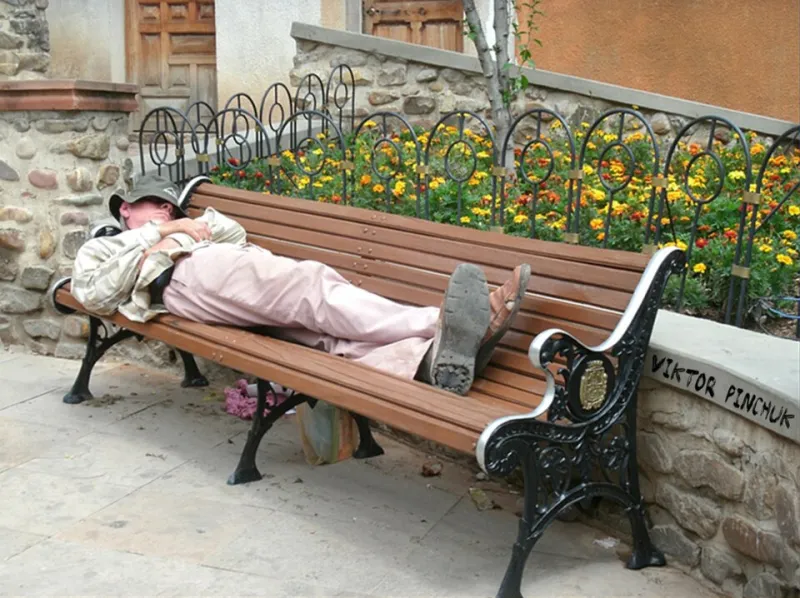
Photo: Виктор Пинчук, CC BY-SA 4.0, via Wikimedia Commons
There's a particular walk I've learned to recognise at Copenhagen Airport. It's about twenty past eight, the early flight from Manchester has just emptied out, and a family of four is crossing the arrivals hall at a pace normally reserved for a connection they're about to miss. One parent is on the phone to the hotel, pleading for an early check-in. The other is dragging a case with a bad wheel. A child is being towed at an angle. Nobody is looking at a single thing.
I've done that walk. You probably have too. And I've gradually come round to the Danish reading of it, which is roughly: what exactly is the hurry, and why are you carrying it into the holiday with you?
The sprint nobody enjoys
The logic of the airport sprint is that the holiday starts when you get to the room. So the hour between the plane door and the hotel door is dead time — something to be endured, compressed, got through. Taxi if you can stretch to it, metro if you can't, straight up the stairs, drop the bags, collapse.
The trouble is that the hour isn't dead. It's the most impressionable hour you'll get all week. You're tired, you're slightly disoriented, your decision-making is at its worst, and every single thing that happens in that window gets quietly filed away as "what this place is like". Sprint through it and the city feels like an obstacle course. Land in it slowly and the same street feels like an invitation.
What landing softly looks like
Danish travellers who've made a habit of this tend to do three things before they go anywhere near a bed. None of them are clever. All of them are deliberate.
Walk a little. Not necessarily to the accommodation. Just twenty minutes in roughly the right direction, bag in tow. It resets your legs after the flight and, more usefully, it signals to your brain that you've arrived somewhere rather than merely been processed by it.
Buy three things. Not a full shop. Three things: water, something for breakfast, and one small treat. It's a tiny act of domestication. Suddenly you have a fridge plan and you know where the nearest shop is.
Sit down in public for ten minutes. A bench, a bakery window, a square. No itinerary, no scrolling. Just let the street do its normal thing while you watch. This is the bit people skip, and it's the bit that does the actual work.
Why it holds up
The case for this isn't mystical. It's mostly about the state you're in. Arriving is a sequence of small decisions — which ticket, which exit, which door, which key safe, which app — and decision fatigue is real and cumulative. Every choice you make in a scramble is slightly worse than the one you'd make rested. Ten minutes on a bench costs you nothing and buys you a better afternoon.
There's a curiosity argument too. The first hour is when you're most willing to actually look at things. Two days later you'll walk past the same courtyard without registering it. Landing softly is partly a way of banking that attention before it thins out.
The sixty-minute Copenhagen routine
In practice, if you're flying into Kastrup and staying anywhere central:
- Skip the taxi queue. The Metro reaches Kongens Nytorv in about fifteen minutes; the trains run to Nørreport in a similar time. Buy a ticket at the machine, tap in, sit down. You'll be in the city before the taxis have cleared the rank.
- Get off a stop early if the weather isn't actively hostile. Copenhagen is small and flat, and fifteen minutes with a wheeled bag is entirely manageable.
- Find a Netto, a REMA 1000 or a Lidl on the way. Water, rye bread, butter, cheese, and whatever fruit looks least tragic. That's breakfast for two mornings for the price of one hotel coffee.
- Sit somewhere for ten minutes. The lakes, a bakery, a bench outside a church. Anything with a view of ordinary life rather than a view of a building site.
- Then go to the accommodation. Not before.
In another European city the moves are identical. The metro name changes, the supermarket chain changes, the bench is still a bench.
What to keep in your hand luggage
The whole routine falls apart if everything you need is in the hold. Pack a small "first hour" pouch:
- A folded tote that fits in a coat pocket, for the shop
- A refillable bottle — European airports are getting better at fountains, though never assume
- One warm layer, because arrival halls and evening streets are both colder than you expect
- A pen, for the occasions a paper form appears from nowhere
- A card or a little local cash, so you're not hunting an ATM with a queue behind you
- Something to eat that isn't an airport sandwich
- A pair of socks — genuinely the cheapest comfort available to a human being
None of it is heavy. All of it removes a decision.
The one thing to resist
Unpacking. Once you've got the key and the door is open, the temptation is to turn the first hour into a chore — cases exploded across the floor, charger hunt, laundry sorted into piles. Leave it. Drop the bag, wash your face, go back out for twenty minutes. The flat will still be there. The light won't.
That's the ritual, really. The trip doesn't start when you're settled. It starts when you stop treating arrival as admin and start treating it as the first, best, least crowded hour of the whole holiday.
Land. Breathe. Move. Then unpack.