Board at Teatime, Wake Up in Denmark: The Overnight Ferry That Puts Ryanair to Shame
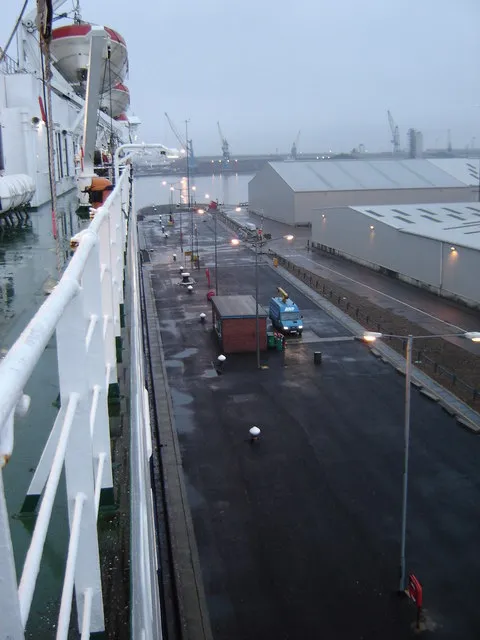
Photo: martin dawes, CC BY-SA 2.0, via Wikimedia Commons
There's a particular kind of misery unique to the British budget flight: the 4am alarm, the motorway services sandwich, the gate change at the far end of Stansted. By the time you land in Copenhagen, you need a holiday from the holiday.
We'd like to propose an alternative that your grandparents would recognise and your carbon calculator would approve of: the overnight ferry.
The Routes That Actually Work
Two crossings matter for Brits heading to Denmark. The first sails from Harwich to Esbjerg (with a stop in Frederikshavn), an overnight run that lets you board in the early evening, eat properly, sleep horizontally, and step off in Denmark by morning. The second option runs from Newcastle — handy if you're based in the North — with connecting services threading you towards the Danish mainland and, eventually, Copenhagen.
Compare that with flying: a budget return from a London airport to Copenhagen can be had for £60 if you're lucky and book at 3am on a Tuesday. But add the train to the airport, a night in a hotel near the terminal (or that 4am taxi), baggage fees, and the return leg at some ungodly hour, and the £30-per-crossing ferry starts looking less like a compromise and more like a bargain.
The Carbon Maths Nobody Mentions
We'll be honest: ferries aren't zero-impact. Per passenger, though, a sailing shared with hundreds of other travellers and tonnes of freight beats a short-haul flight comfortably. If you're the sort of traveller who checks the footprint before booking — and more of us are, according to every survey going — the ferry wins on paper and in the soul.
There's also the hidden benefit: no liquids rule, no baggage allowance anxiety, no taking your belt off in public. You can bring a full bottle of single malt as a gift and nobody bats an eyelid.
Treat the Crossing as the Holiday
Here's where the Danish mindset kicks in. Most Brits treat a ferry as a corridor between two places — a thing to be endured. The Danes, who have rather more coastline than we do, treat the sea as a destination.
Book an en-suite cabin (worth every penny for a proper night's sleep), then head to the onboard sauna. Yes, sauna. Several of the ships on these routes have one, and there is something profoundly civilised about sitting in the heat while the North Sea slides past the porthole.
Eat in the buffet rather than the petrol-station pasty you'd have packed. Have a glass of wine. Read the book you've been meaning to start since January. Go to bed at a reasonable hour.
Sunrise Over the Kattegat
The payoff comes at dawn. Set an alarm — a rare thing we'd recommend — and get up on deck as the ship rounds the Danish coast. The light over the Kattegat in early morning is the sort of pale, silvered glow that Danish painters spent centuries trying to capture. Flat water, low islands, the occasional wind turbine turning lazily on the horizon.
You arrive not wrecked and dehydrated, but rested, fed, and already two-thirds into the holiday. In a country that prizes gentle beginnings over frantic ones, that feels like the right way to arrive.
The Practical Bits
- Book early for cabins — the cheap inside berths go first.
- Off-peak sailing (October to March) is dramatically cheaper and the ships quieter.
- Take the train to Harwich or Newcastle and the whole trip becomes car-free.
- From Esbjerg, direct trains run to Copenhagen in around three hours.
The total journey time is longer than flying, undeniably. But you're not losing a day — you're gaining an evening, a sauna, a proper sleep, and a sunrise. We know which version of 'the journey is part of the holiday' we'd rather tell stories about.