Nowhere Feels Like Nowhere: The Danish Secret to Making Any Temporary Space Feel Like Home
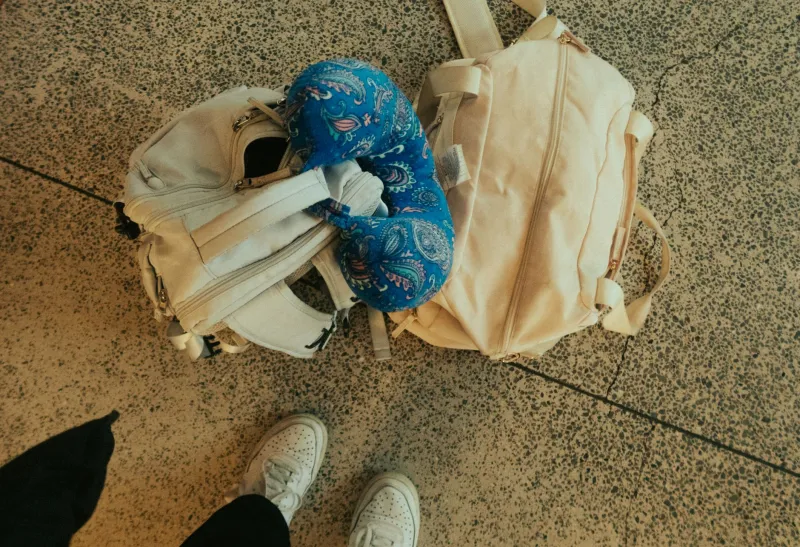
There's a particular kind of loneliness that hits around week three of living out of a suitcase. The novelty of waking up somewhere new has worn off. The local coffee shop no longer feels charming — it just feels unfamiliar. And the apartment you're renting, with its IKEA-adjacent furniture and its single sad overhead lightbulb, feels about as welcoming as a Premier Inn corridor.
If you've ever found yourself scrolling Rightmove at midnight from a Lisbon studio flat, nostalgically staring at terraced houses in Peckham, you're not alone. The freedom of nomadic life is real — but so is the emotional cost of never quite feeling settled.
Danish long-term travellers, however, seem to navigate this better than most. And the reason isn't complicated. It's rooted in a cultural instinct that the Danes have been quietly practising for centuries — one that has very little to do with scented candles and everything to do with intentionality.
It's Not Actually About the Candles
Hygge — that untranslatable Danish concept of cosiness, togetherness, and deliberate comfort — gets reduced to a lifestyle aesthetic in British media every November without fail. Suddenly every supplement is telling you to buy a chunky knit throw and call it a personality. But that's missing the point almost entirely.
For Danish nomads, hygge isn't a decorating style. It's a practice. It's the conscious decision to make your environment work for your emotional state, rather than simply enduring whatever space you happen to be occupying. The distinction matters enormously when you're moving every few weeks.
The question isn't "how do I make this Airbnb look nice?" It's "what does this space need to make me feel like a person who lives here, rather than a person who's just passing through?"
The Lighting Problem Nobody Talks About
If there's one thing that unites terrible temporary accommodation from Tbilisi to Tenerife, it's the lighting. Harsh overhead bulbs. Flickering strip lights. The kind of illumination that makes you feel like you're being gently interrogated.
Danish travellers treat this as a genuine priority — not a frivolous one. A small, warm-toned portable lamp (the kind that folds flat and weighs almost nothing) is as standard in a Danish nomad's pack as a universal adaptor. Plug it in, switch off the overhead light, and the room shifts almost immediately. It sounds absurdly simple. It is absurdly simple. That's rather the point.
British travellers tend to tolerate bad lighting as part of the deal, the same way we tolerate drizzle and delayed trains — stoically, with mild resentment. But tolerating your environment is the opposite of inhabiting it. And inhabiting it, even briefly, is what keeps the loneliness at bay.
One Familiar Object Is Worth a Thousand New Experiences
Minimalist travel has a bit of an image problem in the UK. It conjures visions of ascetic types with a single linen shirt and a disdain for comfort. But travelling light doesn't mean travelling without anchor points.
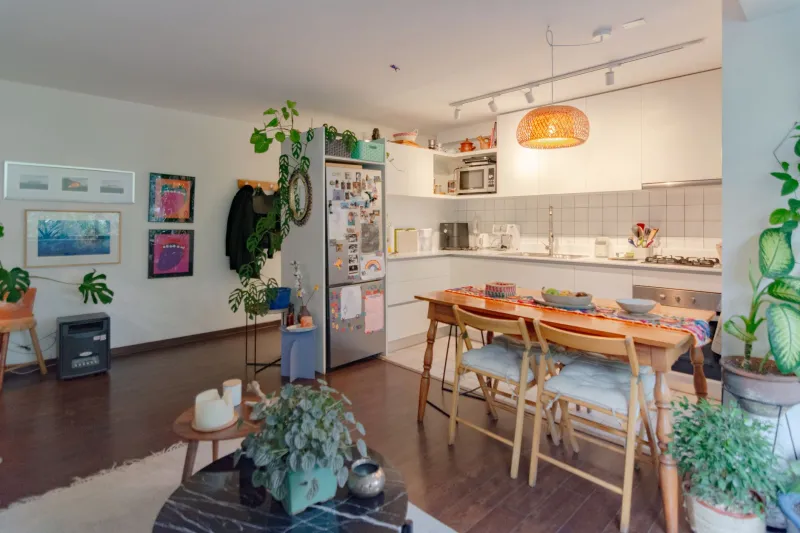
Danish nomads tend to carry one or two small, personally meaningful objects — not for sentimental reasons exactly, but for spatial ones. A favourite mug. A small piece of fabric that doubles as a scarf and a table covering. A dog-eared paperback that's been read three times already. These objects aren't clutter. They're signals to your nervous system that you have arrived, that this space is temporarily yours, that you are allowed to relax.
Neuroscience is increasingly backing up what the Danes have known intuitively: familiar sensory cues reduce cortisol levels and help the brain transition out of hypervigilance. In plain English — your body stops being on alert when it recognises something. That recognition doesn't require a full house. It just requires something.
Rearranging Is Not Weird. It's Necessary.
Here's something most nomads don't admit publicly: the first thing many experienced Danish travellers do upon arriving at a new place is move the furniture.
Not dramatically. Not permanently. Just enough to create a layout that makes sense to them — a reading corner near the window, the desk facing away from the door, the sofa pulled slightly away from the wall to make the room feel less like a showroom. Small adjustments that take ten minutes and cost nothing, but fundamentally change how the space feels to move through.
British travellers often feel oddly reluctant to do this, as though rearranging a rental property is somehow presumptuous. It isn't. You're not redecorating. You're adapting. There's a meaningful difference between being a guest in a space and being a temporary resident of it. The latter requires a small but deliberate act of ownership.
Building Ritual Into the Rootless Life
Perhaps the most underrated hygge principle for nomads isn't about objects or aesthetics at all — it's about time. Specifically, about creating micro-rituals that anchor your day regardless of where you happen to be.
This might be a morning coffee made a specific way, in a specific mug, before you open your laptop. An evening walk at roughly the same time each day, regardless of which city you're in. A Sunday evening voice note to a friend back home. These rituals don't require permanence. They require repetition. And repetition, it turns out, is what the human brain uses as a substitute for place when place keeps changing.
For Brits who've traded their commute for a laptop and their postcode for a rotating cast of European cities, this is genuinely transformative. The loneliness of nomadic life rarely comes from being alone — it comes from the absence of rhythm. Ritual restores rhythm without requiring you to stay anywhere.
Comfort Is Not the Enemy of Adventure
There's a persistent myth in travel culture — particularly among the more evangelical end of the digital nomad community — that discomfort is somehow virtuous. That if you're not struggling, you're not really experiencing anything.
The Danish approach is a quiet but firm rejection of this. Comfort and curiosity are not opposites. You can explore a city with genuine openness and come home to a lamp-lit corner and a familiar mug and feel, briefly, entirely at ease. In fact, that ease is what makes the exploration sustainable. You can only run on adrenaline for so long before the whole enterprise starts to feel like a grind rather than a life.
The Brits who are making long-term nomadic life work — really work, not just surviving it — are the ones who've stopped treating their temporary accommodations as temporary inconveniences and started treating them as homes they happen to be borrowing. The shift is subtle. The difference it makes is not.
Wander light, yes. But don't wander numb. Bring the lamp. Move the sofa. Make the tea properly. You're allowed to feel at home in the world, even when the world keeps changing around you.