Ditch the Commute, Keep the Salary: How British Remote Workers Are Trading London Postcodes for Mountain Passes
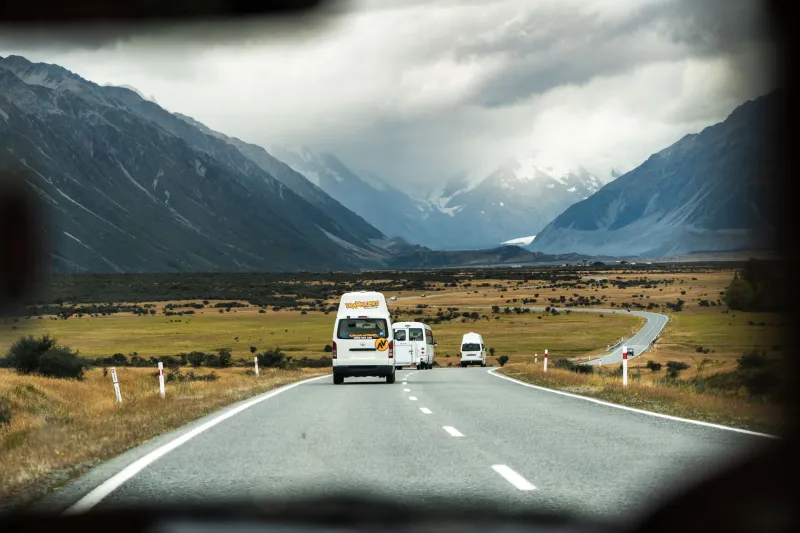
There's a particular kind of Tuesday afternoon that breaks people. You know the one — grey drizzle on the window, a Pret bag on the desk, the District line delays still echoing in your bones. For a surprising number of British professionals, that Tuesday became a turning point. Not a resignation letter, not a dramatic pivot — just a quiet decision to stop treating geography as a given.
We spoke to remote workers across the UK who've done exactly that: kept their jobs, ditched their fixed addresses, and begun living in a way that feels, frankly, more Scandinavian than Surbiton.
The Slow Rebellion Happening Beneath the Radar
It didn't start with a trend piece. For most people we spoke to, the shift began pragmatically. Lockdown proved the office was optional. Then came the cost-of-living crunch, and suddenly a £1,800-a-month London flat started looking less like a necessity and more like an expensive habit.
Sophie, 34, is a UX designer who spent twelve years commuting from Clapham to a Shoreditch studio. In 2022, she gave up her flat, bought a secondhand campervan, and began moving between Spain, Portugal, and southern France — all while keeping her full-time role at a mid-sized tech firm.
"My employer doesn't even know I'm not in the UK most of the time," she admits, then pauses. "Well, they do now. But when I first started, I just... didn't mention it. I met every deadline. My output actually improved."
That last part comes up repeatedly. The nomadic lifestyle, stripped of its Instagram aesthetics, often just means fewer distractions, more intentional living, and — crucially — less money haemorrhaging into rent.
The Danish Thread: Doing More With Less
At The Danish Nomads, we've long believed that the minimalist philosophy underpinning Scandinavian culture isn't about deprivation — it's about clarity. The Danes have a word, nok, meaning "enough." Not abundance, not scarcity. Enough.
That philosophy maps surprisingly well onto the digital nomad lifestyle. When you're living out of 40 litres of luggage or a caravan the size of a generous bathroom, you make different choices. You stop accumulating and start curating. You spend on experiences rather than objects. You notice, with some embarrassment, how little you actually needed.
Jamie, 41, a project manager from Leeds who now splits his time between a campervan in the Alps and a rented room in Lisbon, describes it this way: "I used to own so much stuff. A three-bed house full of things I never used. Now I have a laptop, good walking boots, a decent coffee setup, and honestly? I feel richer than I ever did."
The Practicalities Nobody Talks About (But Everyone Needs to Know)
Here's where we get unglamorous, because this stuff matters.
Tax residency is the first conversation you need to have — ideally with an accountant who specialises in expat or nomadic arrangements. As a UK citizen working remotely, you remain liable for UK tax if you spend more than 183 days in the country per tax year, or if you meet certain other criteria under the Statutory Residence Test. Spending extended periods in EU countries can trigger tax obligations there too, particularly in places like Germany, France, or Spain, which have relatively short thresholds for establishing tax residency.
The good news: several countries have introduced digital nomad visas specifically designed for this scenario. Portugal's D8 visa, Spain's recently launched remote work visa, and similar schemes in Croatia and Malta allow non-EU nationals (which now includes Brits, post-Brexit) to live legally while working for foreign employers. Requirements vary, but typically involve proof of income above a minimum threshold and valid health insurance.
Insurance deserves its own paragraph. Your standard travel insurance won't cut it if you're living nomadically. Look at providers like SafetyWing, World Nomads, or Cigna Global, which offer policies designed for long-term travellers. If you're keeping a UK address (more on that below), you may also want to maintain access to NHS services, which requires a degree of planning around your residency status.
Maintaining a UK address is more important than it sounds. You'll need one for banking, HMRC correspondence, driving licence renewals, and a dozen other administrative threads that don't simply disappear when you leave. Many nomads use a family member's address or a registered mail forwarding service.
Working Across Time Zones Without Losing Your Mind
The productivity question is the one sceptics love to raise, and it's fair. Working remotely from a different time zone introduces real friction — particularly if your role involves synchronous collaboration.
The professionals who make it work tend to share a few habits. First, they're ruthlessly clear with their teams about availability windows. Rather than pretending to be online at UK hours when they're physically in a mountain timezone, they negotiate core overlap hours — typically a four-to-six-hour window that suits both parties.
Sophie has her team's stand-up at 10am UK time, which means 11am for her in Central European Time. "It's barely an inconvenience," she says. "And outside that window, I'm just... working. Same as I would be at home, except the view is considerably better."
Asynchronous communication tools — Notion, Loom, Slack — have made this dramatically easier. The pandemic normalised the idea that not everything needs to happen in real time, and nomadic workers are simply extending that logic geographically.
What You Actually Give Up
Let's be honest, because glossy travel content rarely is: there are genuine trade-offs.
Relationships require more effort when you're not physically present. The spontaneous pub Friday, the Sunday roast at your mum's — these things become rarer, and their absence is felt. Some nomads describe a creeping loneliness that Instagram doesn't capture, particularly in the first six months before they've built new social rhythms.
Healthcare access, while manageable, requires more planning than it does at home. Career progression can stall if visibility matters at your company. And the administrative overhead — visas, tax filings, insurance renewals — is genuinely tedious.
But for those who've made the leap, the calculus tends to come out the same way. The Tuesday afternoon in the rain, or the Tuesday afternoon beside an Alpine lake with a coffee and a clear head. It's not a difficult sum.
Starting Small: The Case for Testing Before Leaping
If you're reading this from a London flat or a Manchester terrace and feeling the pull, the Danish approach would suggest starting with nok — enough of a test to know if it suits you, without burning everything down.
Take a month of remote work from Lisbon or the Canaries (both popular with UK nomads for their time zone alignment and relatively low cost of living). See how your productivity holds. Notice what you miss and what you don't. Talk to your employer honestly — more companies than you'd expect are open to the conversation, particularly if your output is demonstrably strong.
The nomadic life isn't for everyone. But for a growing number of British professionals, it turns out the fixed address was the habit, not the necessity. And once you realise that, the map opens up considerably.