Read the Streets, Not the Postcode: A Dane's Two-Block Test for City Breaks

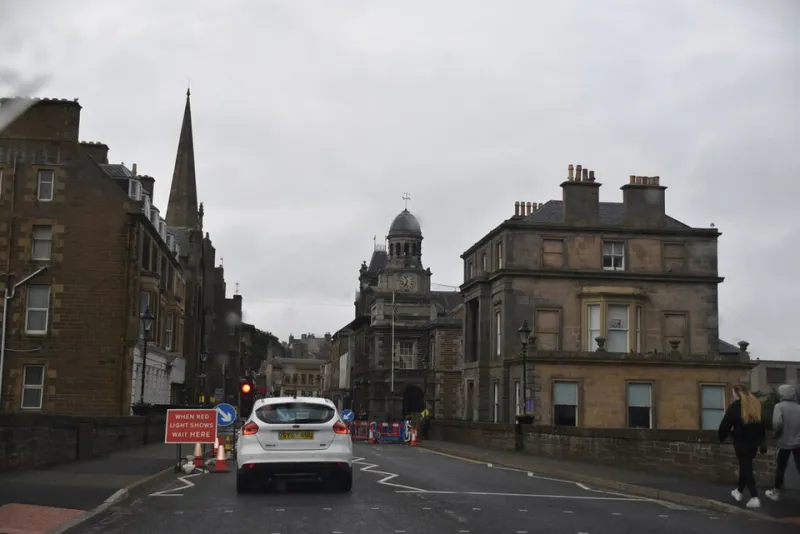
Photo: Kowloonese at English Wikipedia, Public domain, via Wikimedia Commons
Most accommodation decisions get made on the wrong evidence. We look at a bedroom with a nice duvet, a bathroom with a small plant, a lamp that has clearly been bought for the photograph. We read that the place is "in the heart of everything", which sounds like a blessing right up until the third night of bin lorries at half five.
Danish travellers — particularly the ones who move around a lot for work — tend to approach it differently. They don't ask what the flat is like. They ask what the streets are like, and they ask it before they book. The tool for this is almost embarrassingly simple.
What the two-block test actually is
Open the map. Find the pin. Now draw an imaginary square around it that extends roughly two blocks in each direction — north, south, east and west. Not the city, not even the neighbourhood. Two blocks.
Then try to name what's inside that square. Out loud, if you like.
If you can list a bakery, a small supermarket, a green space, a bus stop or a metro entrance, and somewhere to sit down outside without spending a fortune, the location has some substance. If all you can name is "the river" and "a car park", the location is thin — and no amount of nice bedding will fix it.
The reasoning is straightforward. However much you spend on a city break, you don't really live in a flat. You live in a radius of about four minutes' walk in any direction, repeated fifteen times a day. That radius is the actual product you're buying.
Four questions that do most of the work
The square gives you the frame. These four questions fill it in.
Where do I buy milk at eight in the morning? A city where you can't get breakfast without a sit-down menu is a city with a lot of small frictions and a bigger bill than you planned.
Where do I sit outside without ordering a £14 cocktail? Benches, steps, a canal edge, a park. If the only outdoor space nearby is licensed premises, you'll be indoors for four days.
What's going to wake me up? A tram, a bar street, a delivery depot, a school yard, a cathedral bell. Only one of those is charming, and it isn't the depot.
Where do I walk in the evening after dinner? This is the one people forget. Nearly every decent evening on a city break involves a walk with no purpose. If the surroundings aren't walkable after dark, your evenings shrink to the flat.
Reading a listing for what isn't there
Descriptions are accidentally honest if you read them as warnings:
- "Vibrant" and "lively" are noise words in a costume. Assume bars, and assume the windows are single-glazed.
- "In the heart of everything" often means an arterial road, a station driveway, or both.
- "Minutes from everything" — ask which direction. Two minutes to a metro line is a gift. Two minutes to an eight-lane approach road is not.
- "Peaceful residential area" with no shop within ten minutes is lovely for a writer's retreat and wrong for a four-night break, where you'll spend your evenings walking back from the centre in the dark.
None of this is dishonesty. Hosts describe their flat, not their street. You have to do the second job yourself.
Three kinds of neighbourhood
Practically, most listings near city centres fall into one of three types.
The stage set. Beautiful, polished, historically gorgeous, and completely empty after six. The old town, the museum quarter, the bit the postcards were taken in. Fine for one night, strange for five. You'll notice you're always eating with other visitors.
The corridor. Cheap, close to the station, designed for passing through rather than staying. Convenient if you're catching an early flight. Less good if you'd like to feel you've been anywhere.
The lived-in one. Slightly scruffy. Bikes outside every door. A playground, a launderette, a greengrocer, a school, an actual hardware shop. A bit of noise at normal noise hours. Danes will take this one nearly every time, and not out of any romantic feeling about authenticity — it's simply easier to be a human there for a few days.
Ten minutes on Street View
Run the test properly and it takes about the length of a kettle boil.
- Drop the little yellow figure at the front door and look both ways.
- Read the ground floors of three buildings. Shutters, blacked-out windows and neon signage mean late nights. A hairdresser, a dental practice, a bike repair place mean ordinary life.
- Check the pavement. Wide and tree-lined usually means a quieter road. Narrow with a double yellow line usually doesn't.
- Find the nearest supermarket on the map and check the opening hours. If it shuts at six on a Sunday, plan around it.
- Locate the nearest green space, even if it's a square with three benches.
- Trace the walk to the nearest metro, tram or bus stop and count how many times it crosses a major road. Three crossings is a bad walk you'll do twice a day.
- Look backwards, not just forwards — spin the camera around at the door and see what's behind the building. Car parks and loading bays hide there.
When it's fine to ignore all this
A single night, a late arrival, a flight at dawn, a work trip where you'll see the flat and nothing else. In those cases book the corridor, sleep well, and don't pretend it's a holiday. The two-block test is for the trips where the streets are the point.
The short version is easy to remember: book the streets, not the pin. The duvet photograph is not a promise about anything that happens outside the window.