Why Danes Happily Pay £4 for Coffee (and Cut Costs Everywhere Else)
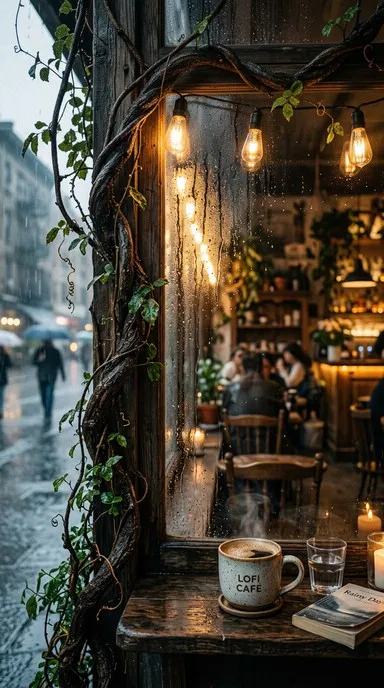
Photo: cozy Copenhagen café window candle coffee rain, via images.stockcake.com
There's a particular kind of British traveller we've all met at the airport. She's spent three evenings comparing flights and found one £14 cheaper, but it leaves from Luton at 5:40am. She's downloaded every discount app going. And then she arrives at her destination and buys a fridge magnet, a novelty towel, a fourth tote bag, and a 'treat' dinner she doesn't even fancy, because she's 'on holiday'.
Danes find this arithmetic baffling. Not because they're careless with money — Denmark is hardly a nation of big spenders — but because the equation is backwards. The things worth paying for are the things you'll actually feel. Everything else is clutter with a receipt.
The £4 coffee isn't about the coffee
Sit down at a café in Copenhagen and that flat white will sting. Four pounds, easily. Sometimes more. British visitors wince, photograph the price board, and tweet about it.
But here's what's actually happening at that table. Nobody is there for a transaction. They're there for the hour. The candle on the windowsill, the friend across the table, the rain doing its thing outside while you're warm and unhurried. Danes have a word-adjacent instinct for this: you're not buying a drink, you're buying an afternoon that was worth having.
Compare that to the British habit of grabbing a meal deal at your desk, eating in twelve minutes, and resenting every bite. Same money, roughly. Radically different return.
Where the budget actually leaks
Here's the uncomfortable audit. Look at your last holiday spending and sort it into two piles: experiences and objects. For most UK travellers, the object pile is quietly enormous — the airport snacks, the 'just in case' purchases, the souvenirs for people whose names you'll struggle to remember by February, the taxi because the bus looked confusing.
The experience pile — the meal you still talk about, the kayak hire, the entry fee to that weird museum — usually cost less and delivered more. Yet it's the experience pile we trim first when we're 'being sensible'.
Danes do the opposite. They'll take the regional train instead of the express, cook in the Airbnb three nights out of four, and pack one bag between two people. Then they'll spend without flinching on the things that make the trip the trip.
A framework: the 'just enough' budget
You don't need a spreadsheet with forty lines. You need three rules.
Rule one: spend on hours, not items. Before buying anything on holiday, ask what it costs per hour of genuine enjoyment. A £4 coffee savoured for an hour with a view? Excellent value. A £25 'authentic' scarf you'll never wear? Catastrophically bad. This one question kills most impulse spending on contact.
Rule two: economise where nobody's watching. Cut costs on logistics — the red-eye flight, the room with the slightly wonky shower, the packed lunch on the train. Nobody remembers their boarding time. Everybody remembers the meal where the waiter brought something you didn't order and it turned out to be the best thing on the table.
Rule three: set a joy budget and defend it. Decide a daily figure for purely pleasurable spending — coffee, wine, a museum, a silly boat trip — and spend it deliberately, every day, without guilt. Paradoxically, having a joy budget makes you spend less overall, because you stop the leaky, guilt-fuelled drip of small purchases that never quite satisfy.
The stuff trap, specifically
Souvenirs deserve their own paragraph because they're where British holiday budgets go to die. We buy things to prove we went somewhere, then get home and feel faintly embarrassed by them. The Danish alternative isn't buying nothing — it's buying one thing, chosen slowly, that you'll genuinely use. A proper wool jumper from a Norwegian yarn shop. A ceramic cup you'll drink from every morning for a decade. One object with a story beats fifteen with a price tag.
And honestly? The best souvenirs cost nothing: a recipe you smuggled home, a contact in a foreign city, a slightly better sense of what you actually need. None of those fit in the overhead locker, which is rather the point.
What this looks like in practice
Picture a week in Lisbon on the same budget, spent two ways. Version A: cheapest flight, cheapest bed, then daily retail therapy and taxis because the walking app was annoying. Version B: sensible flight, a small room in a real neighbourhood, groceries for breakfasts — and then a long, expensive, wonderful seafood lunch, a fado night with proper tickets, and coffee taken sitting down, every single day.
Version B costs the same. But only one of them comes home with you.
The £4 coffee rule isn't really about coffee, and it isn't really about £4. It's a reminder that a travel budget is a values statement. Danes have simply decided, as a national habit, that their money should buy moments rather than merchandise — and that a holiday spent counting pennies on the wrong things was never a rest in the first place.
Next trip, try it. Haggle the flight, share the bag, cook the pasta. Then order the coffee, sit by the window, and stay for the refill.